
Most Connecticut lawns get their last mow between early November and early December, usually once grass growth stops and soil temperatures hover around 50°F or lower. Go by growth, not the calendar. Finish a notch or two below summer height, often 2 to 2.5 inches depending on grass type, and mow when dry.
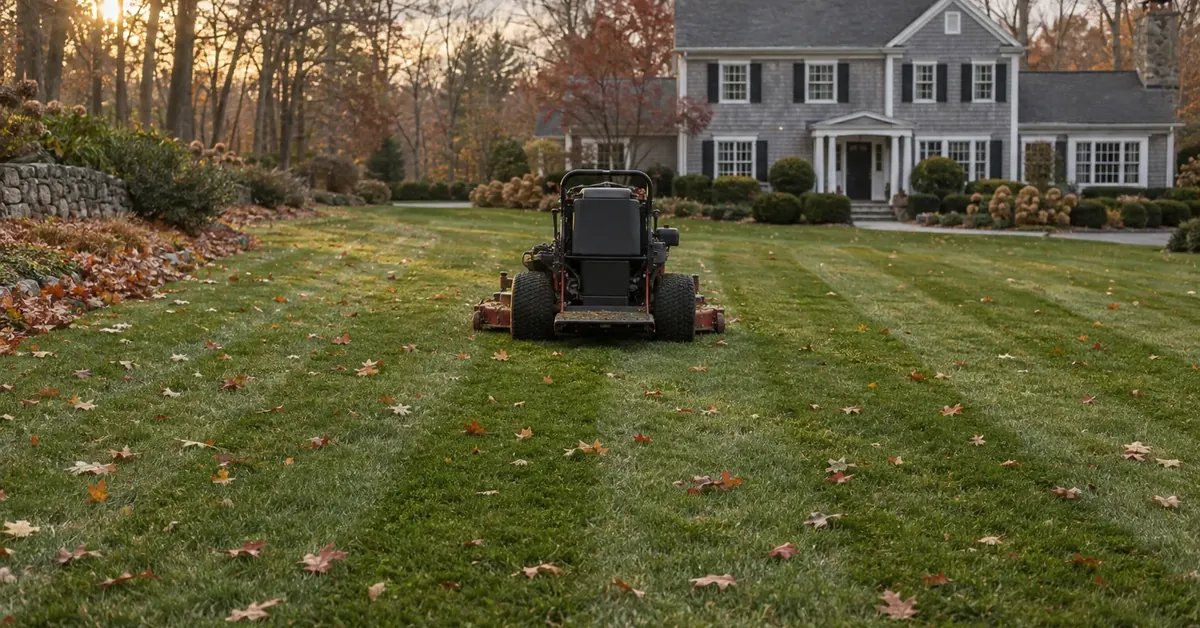
What month do you stop mowing a lawn in Connecticut?
The deciding factor is grass growth, not a particular month. Most lawns here are cool-season grasses such as Kentucky bluegrass, fescue, and perennial ryegrass. They slow down through October and often quit growing by mid-November to early December.
A warm fall can keep them growing longer. A hard freeze can slow growth sharply, but a stretch of milder weather afterward may bring some growth back, so keep watching the lawn rather than assuming the season is over. Conditions also vary from yard to yard, with differences in sun, shade, soil, and grass type, so neighbors may not finish on the same day.
How do you know it's time for the last mow of the season?
Watch the grass, not the date. These are the signs to watch for:
- You went from mowing weekly to every 10 to 14 days, and the blades barely grew in between.
- Overnight frosts are now regular, and the lawn is stiff and slow to recover in the morning.
- Daytime temperatures mostly stay in the 40s, and the soil feels cold.
A simple test: after a mow, check the lawn again in a week. If it is still at the height you cut it, growth has likely stopped and that was your last mow. If it grew noticeably, give it one more pass.
How short should you cut the grass for the final mow?
The best final height depends on your grass type and its recommended mowing range. For many Connecticut lawns, that works out to about 2 to 2.5 inches. During summer, most lawns do best at 3 to 3.5 inches, so this is a modest step down, not a scalping. Tall fescue and some other grasses may prefer to stay a bit taller, so check the range that suits yours.
Why go lower at all? Long grass flops over under leaves and snow, mats down, and creates the damp, tangled cover where snow mold, field mice, and voles like to settle. A slightly shorter lawn goes into winter cleaner and stands up better.
Why not go lower than that? Grass blades store energy for winter, and cutting too short exposes the crowns to cold and drying wind. The common mistake is dropping the mower to its lowest setting on the final pass. Instead, lower the deck one notch over the last two or three mows so the grass adjusts gradually.
What is the 1/3 rule, and why does it matter in fall?
The 1/3 rule says never remove more than one third of the grass blade height in a single mow. Cutting more than that stresses the plant, because it loses too much leaf at once and has to spend stored energy to recover.
It matters in fall because lawns often get away from people. A rainy October, a skipped week, or a busy weekend of leaf cleanup can leave the grass taller than you want. If it is 4.5 inches tall and you want it at 2.5, do not do it in one pass. A typical way to handle it:
- Cut it to about 3 inches (one third off 4.5).
- Wait a few days.
- Cut again to 2.5 inches for the final height.
It takes an extra trip with the mower, but the lawn goes into winter in much better shape than if it were chopped back hard.
Should you mow or mulch fallen leaves, or remove them first?
It depends on how many leaves are down. If leaves are covering the turf faster than you can keep up, that is a sign you need a leaf plan, not a sign the grass has stopped growing. Keep checking the grass itself to decide when the last mow is.
Mulching works when the layer is light. If you can still see grass through the leaves, running over them with a mower chops them into small pieces that drop between the blades and break down over the winter. Pieces smaller than a dime are about right.
Remove them first when the layer is heavy. A thick, wet blanket of leaves, especially large ones like oak and maple, can smother turf, hold moisture against the crowns, and set up the conditions for snow mold. Mowing a deep, wet pile also clogs the deck and leaves clumps that do more harm than good.
On a typical lawn with a few mature trees, the sequence is usually: blow or rake the heavy areas, then make the last mow to chop what is left. Bagging clippings is not needed unless the grass is long enough to clump. If you would rather not spend your weekends on it, Bollinger Landscaping offers Fall Cleanups & Leaf Removal and Lawn Mowing as part of our Landscape Maintenance services in Fairfield County.
Why should you mow only when the grass is dry?
Wet grass and wet leaves clump, clog the mower, and tear the blade tips instead of cutting them cleanly. If the forecast is rainy all week, it is better to wait for a dry afternoon, even if that pushes the last mow a few days later.
What should you do with the mower and lawn after the last cut?
Start with the mower. Clean the deck, sharpen or replace the blade so it is ready in spring, and follow the manufacturer's storage instructions for the fuel and oil. Depending on the model, that may mean adding fuel stabilizer or draining the fuel system and running the engine until it stops. Spring is always busy, and a mower that is serviced in November starts easier in April.
Then give the lawn a final walk-through:
- Pick up toys, hoses, furniture, and anything else that will sit on the grass under snow.
- Clear any leaf piles from the turf one last time.
- Note thin or bare patches. Those are candidates for core aeration and overseeding next fall (or in spring, depending on the timing and grass type).
If you have an irrigation system, schedule the blowout before the first hard freeze so water does not freeze in the lines. We handle irrigation blowouts as well as lawn care services such as fertilization, core aeration, overseeding, and disease treatment. You can see what we offer on our lawn care page.
If you are not sure whether your lawn is ready for its last cut, or you want help with leaves, final mowing, or planning next season, get in touch and tell us about your property. We will help you work out a practical next step.
Frequently Asked Questions
Is it bad to mow wet leaves and grass in November?
It is best to avoid it. Wet leaves and grass clump, clog the deck, and leave uneven piles that can smother the lawn. Wait for a dry afternoon, and remove heavy leaf cover before you mow.
Can you mow too short before winter?
Yes. Cutting too short exposes the crowns to cold and drying wind and leaves less leaf area to store energy. The right final height depends on your grass type, and many lawns finish around 2 to 2.5 inches. Step the mower down gradually over the last few mows.
Should you bag clippings on the last mow?
Usually not. Fall clippings are short and break down quickly, so they can stay on the lawn. Bag them only if the grass was long and the clippings are clumping, or if you are picking up a heavy leaf load at the same time.
Do you need to keep mowing after the first frost?
Not necessarily. A light frost does not end the season, and the grass may keep growing for a few more weeks. Keep mowing as long as the grass is growing, and stop once it holds its height for a week or more.
Does a late-season mow help prevent snow mold?
It helps. Grass that is not too long and a lawn free of heavy, matted leaves are less likely to develop snow mold. It is not a guarantee, since weather and lawn conditions also play a part, but a clean, properly cut lawn is a good start.