
What should a one-night outdoor lighting plan cover?
Plan the display around the guest experience: identify the arrival point, the places people will gather, and the features that should feel welcoming after dark. Confirm the event window, setup access, weather fallback, and takedown timing with your host and provider. Then ask what scope fits your one-night gathering.
Bollinger Landscaping's Holiday Event Lighting service is described for parties, open houses, seasonal gatherings, and one-night events. Its page names entryways, trees, patios, and walkways as possible parts of the scene, with setup before guests arrive and takedown after the event. For a host, the useful first step is to explain how the evening will work, not to begin with a shopping list of lights.
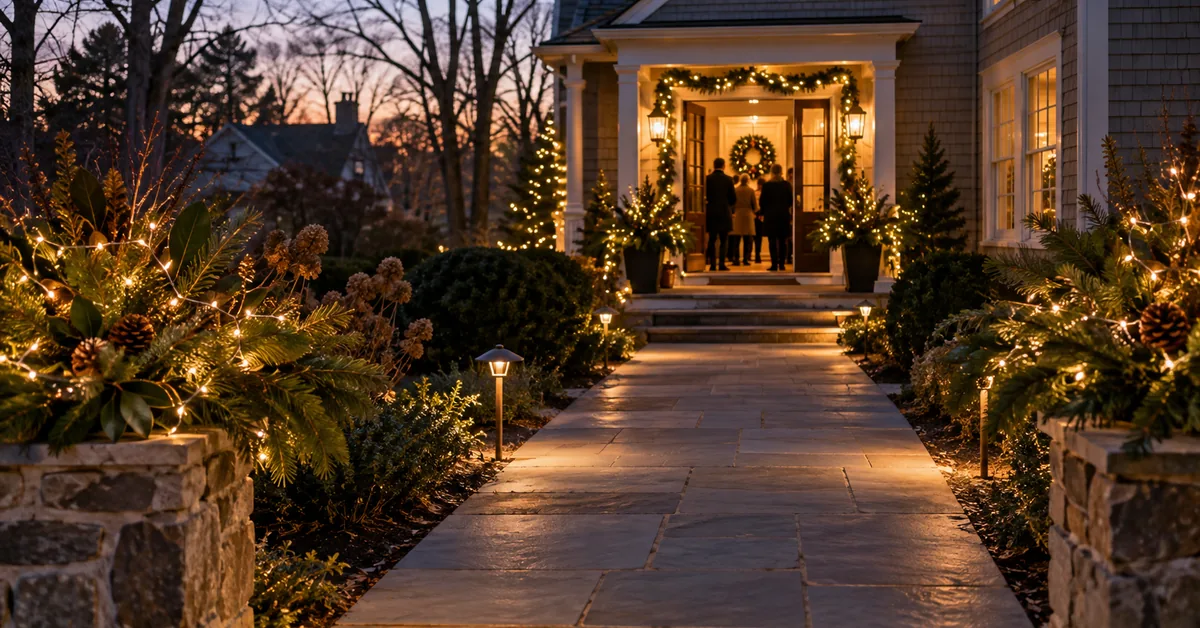
Start with a short event brief
Write down the event date, guest arrival time, planned end time, and the outdoor areas you expect to use. Note whether people will enter through the front door, a side entry, or a gate, and where they are likely to gather once they arrive. If the event includes a toast, a meal, or a short welcome, include that in the schedule so the lighting conversation accounts for the moments that matter.
Then describe the setting in ordinary language. Is the gathering centered on a patio, a garden, an open house route, or a path between the entrance and another outdoor space? Which details should be noticeable after dark, and which areas do not need attention? A short brief helps turn a broad request into a useful conversation about the actual property and event.
Trace how guests will move through the space
Think through the event from arrival to departure. Identify the route guests will use to reach the entrance, move between the entryway and gathering area, and return when they leave. Note any steps, changes in surface, narrow passages, doors, or places where the route could be unclear at night. These are planning observations for the host and provider, not instructions to install anything in a particular way.
Next, separate movement areas from places where people will pause. An entryway may need to feel welcoming, while a patio may be the main gathering point. A tree could serve as a visual landmark between them. The service page includes entryways, trees, patios, and walkways among its event-lighting examples, so tell the provider which of those features matter to your gathering and how guests will use them.
If the property has more than one possible route, say which one is intended for guests and which should remain secondary. Agree on how the plan accounts for doors and exit routes, and avoid creating a layout that draws attention away from safe movement. A clear route matters more than trying to highlight every corner of the yard.
Choose a focal point before adding accents
Pick the view you most want guests to notice: perhaps the arrival, a patio where people will spend time, or a distinctive tree already on the property. Then decide whether a second feature would help connect that view to the rest of the event. This keeps the conversation focused and gives the provider a starting point for a design that fits the setting.
Describe the feeling you want rather than prescribing every detail. You might want a relaxed welcome, a more formal open-house atmosphere, or a festive seasonal backdrop. Bollinger's holiday-lighting page describes custom layout and color choices for its broader service; ask which options make sense for a one-night event and how you will review the proposed look before the date. Ask what choices fit the short event rather than assuming every broad service option belongs in this request.
Consider the scene from more than one viewpoint. A layout seen from the street may feel different from the view guests have once they reach the patio. If daytime photos would help explain the property, offer them as context, then ask what information the provider needs to understand the evening view. The goal is a shared picture of where the event happens and what should stand out.
Make setup and takedown part of the event schedule
A one-night gathering has a narrow working window. Confirm when the provider can access the space, when the setup must be complete, and when takedown can happen after guests leave. Bollinger's event-lighting page describes setup before guests arrive and takedown after the event wraps, but the exact access plan should be agreed for the requested date and property.
Ask who will coordinate with the host on event day, how the provider should reach the work area, and what the host should expect after the gathering ends. If the timing of the event changes, decide how you will communicate that before the day. If weather could change the plan, discuss the host's alternate arrangement in advance rather than assuming a display can be shifted or left in place.
State clearly that you are planning a one-night outdoor gathering, then ask the team to set out the event-specific scope, setup timing, and takedown timing in writing. A short schedule keeps the discussion focused on what happens before, during, and after your gathering.
Keep safety and venue rules in the conversation
Outdoor event planning should include a safety check, but an article cannot determine what rules apply to a particular property. The U.S. Consumer Product Safety Commission's holiday decoration guidance addresses safety-tested lights, while the National Fire Protection Association's holiday fire-safety resources cover seasonal decoration and lighting risks. Connecticut's Office of the State Fire Marshal says its holiday bulletin covers decorative vegetation in buildings, advises keeping natural trees out of corridors and exit paths, and calls for listed and labeled decorative lighting.
For your event, ask the venue or property owner what approvals and access rules apply, and direct site-specific safety questions to the local fire marshal or qualified professionals. Keep doors and exit routes part of the plan. Do not treat a one-night event as a reason to skip the venue's review, and do not use a general checklist as a substitute for decisions about the actual site.
What to include in your first inquiry
A concise message can include the event date and hours, the property location, the outdoor areas in use, the guest arrival route, the view you want to emphasize, and the timing available for setup and takedown. Add any access limits or venue requirements you already know. If you are uncertain about the best focal point, say so and describe what you want the gathering to feel like.
The service-area page lists the local towns Bollinger serves; check it before you inquire.
Then ask whether the event fits Bollinger's Holiday Event Lighting service and what the next step is. The Bollinger contact page is the direct route for sharing your property and event details. A clear request gives the team enough context to respond about the scope without implying that a date or particular arrangement is available.
Frequently asked questions
Does Bollinger offer lighting for a one-night gathering?
The public Holiday Event Lighting page specifically describes one-night events, parties, open houses, and seasonal gatherings. It also describes setup before guests arrive and takedown after the event. Contact Bollinger to confirm whether your requested date and property are a fit.
Which parts of an outdoor space can be discussed?
The service page names entryways, trees, patios, and walkways as event-lighting examples. Describe how guests will use the space and ask which features belong in the event-specific plan.
When should setup and takedown happen?
The page describes setup before guests arrive and takedown after the event wraps. Agree on the exact access, completion, and removal times with the provider for your event.
What safety rules apply to temporary event lighting?
That depends on the site and the setup. Review the venue's requirements and ask the local fire marshal or qualified professionals about site-specific questions. CPSC, NFPA, and Connecticut's Office of the State Fire Marshal publish holiday decoration and fire-safety guidance, but a general article is not a site approval.