
October brings beautiful fall color to Fairfield County, but it also brings a problem homeowners often overlook: water that has nowhere to go.
As leaves begin to accumulate across Fairfield and other Fairfield County communities, drainage paths can become blocked. Add November rain and falling temperatures, and those soggy areas you've been ignoring may become harder to address as winter approaches.
The good news? Late October is a useful time to identify drainage problems, understand what's causing them, and plan the right solution before winter.
Why October and November Matter for Yard Drainage
Fall changes how water moves across your property.
Leaves collect in low spots and drainage openings. Rain can expose areas where water pools instead of flowing away. As temperatures drop, persistently wet ground can become an additional concern when freezing weather arrives.
For Fairfield County homeowners, this is a good time to pay attention to what happens during and after rainfall.
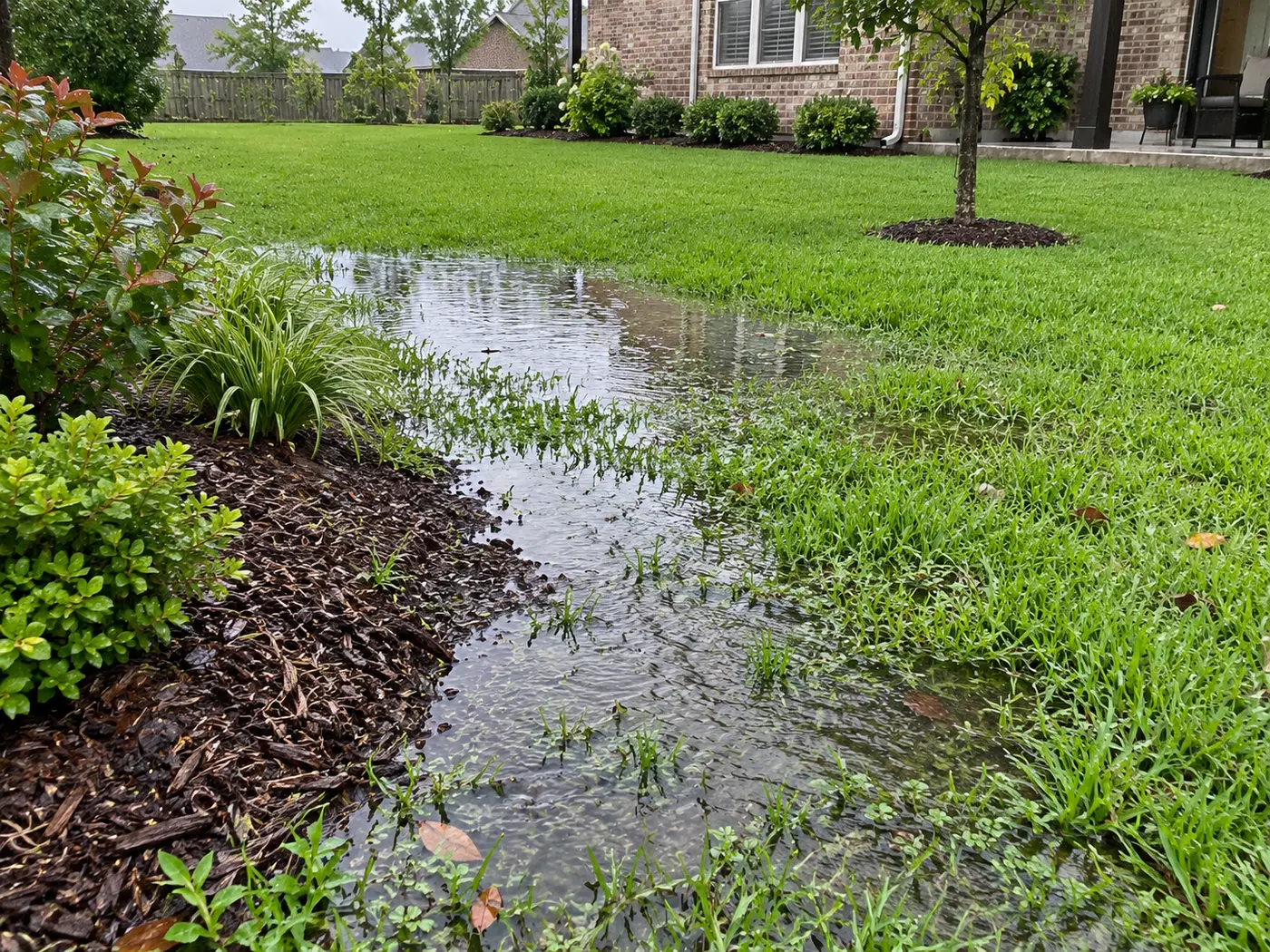
Does water collect beside your foundation? Does one section of lawn stay soggy longer than the rest? Does runoff wash mulch out of your landscape beds?
These are clues worth investigating before they become recurring problems.
5 Drainage Warning Signs You Shouldn't Ignore This Fall
1. Standing Water That Lingers After Rain
A puddle immediately after a storm isn't always a concern. But when the same area repeatedly holds water long after the rest of the yard has drained, the property's grading or underlying soil conditions may need attention.
2. Water Pooling Near Your Foundation
Your landscape should direct surface water away from your home, not toward it.
If water consistently accumulates near the foundation, an evaluation can help determine whether grading or another drainage solution is appropriate. Persistent water intrusion inside the home should also be assessed by a qualified foundation or waterproofing professional.
3. Mulch and Soil Washing Out of Landscape Beds
When rain repeatedly carries mulch, soil, or debris across your lawn or walkways, it may indicate that runoff is moving through areas where it shouldn't.
Correcting the water's path can be just as important as replacing the displaced materials.
4. Lawn Areas That Stay Soft or Muddy
If one part of your lawn remains saturated while surrounding areas dry out, the problem may extend beyond routine lawn maintenance.
Poor surface drainage, compacted soil, or subsurface water movement can all contribute. The right solution depends on what's happening below and around the affected area.
5. Water Collecting Along Patios and Walkways
Hardscaped areas can influence where rainwater travels. If water repeatedly collects along a patio, walkway, or adjacent planting bed, the surrounding grades and drainage should be evaluated together.
Addressing drainage before making additional landscape improvements can help protect that investment.
What Can Bollinger Landscaping Do About Drainage Problems?
Not every wet yard needs the same solution.
At Bollinger Landscaping, we look at the property's conditions and the way water moves through the landscape before recommending the appropriate work.
Landscape Grading and Regrading
Sometimes the problem is simply that the ground directs water toward an area where it collects.
Regrading reshapes problem areas to encourage better surface drainage, helping move runoff away from your home, lawn, or landscape beds toward an appropriate drainage location.
This work can also be coordinated with sod installation, planting beds, and hardscape improvements.
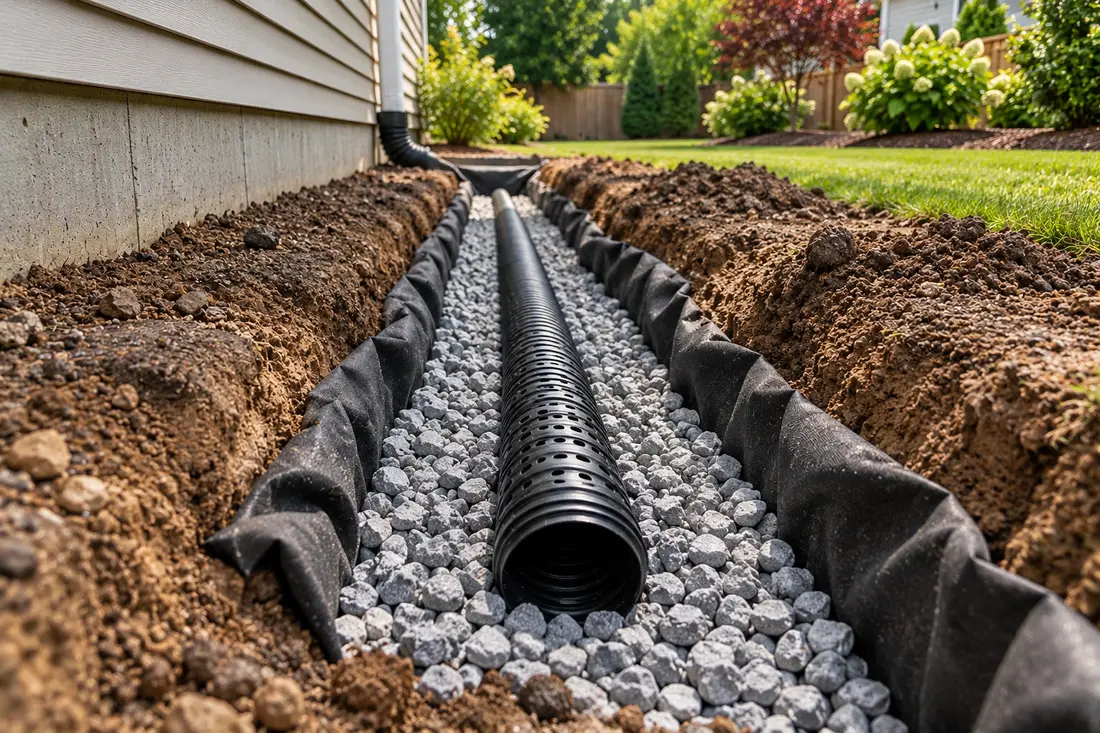
French Drain Installation
When changing the surface grade alone isn't enough, a French drain may be an appropriate solution.
French drains use an underground drainage system to collect and redirect subsurface water. They can help address chronically wet sections of lawn, saturated planting beds, and certain drainage conditions near foundations.
The location, design, and discharge route need to suit the individual property.
Drainage as Part of a Larger Landscape Project
Planning new sod, plantings, or hardscaping?
It's worth checking drainage first. Bollinger can coordinate grading and drainage work with broader landscape improvements, so you're not installing new features over an unresolved water problem.
A Simple Late-October Drainage Check
Before November gets underway, take a walk around your property and look for a few things:
- Leaves or debris blocking accessible surface drainage openings
- Low areas where rainwater regularly collects
- Mulch or soil that has washed downhill
- Persistent moisture near the home
- Wet spots along patios, walkways, and lawn edges
Pay particular attention after the next rainfall. A few photos of where water collects, and how long it remains, can be useful when discussing the problem with a landscape professional.
Only clear drainage areas that are safe and accessible. Avoid opening underground drainage systems or entering flooded areas.
Should You Fix Drainage Before Winter?
If you've noticed the same drainage problem repeatedly this year, October and November are sensible months to have it evaluated.
Depending on weather, ground conditions, and project scope, some drainage improvements may be suitable for fall installation. Others may be better planned now and completed when conditions permit.
The important thing is understanding the issue before another season of rain, snow, and freeze-thaw cycles.
A properly planned solution begins with the actual conditions on your property, not a one-size-fits-all approach.
Frequently Asked Questions
Can a French drain help with a soggy lawn?
Yes, when subsurface water accumulation is contributing to the problem. However, grading or other corrections may be more appropriate for certain types of surface pooling.
Is fall a good time to address landscape drainage?
Fall is an excellent time to observe problem areas and arrange an assessment. Whether installation can happen before winter depends on site conditions, weather, and the recommended work.
Does every drainage problem require a French drain?
No. Some properties benefit from surface regrading, while others need an underground drainage system or a combination of improvements.
Does Bollinger Landscaping provide drainage services in Fairfield County?
Yes. Bollinger offers landscape grading, regrading, and French drain installation, serving homeowners in Fairfield, Weston, New Canaan, Darien, Norwalk, and surrounding service areas.
Don't Let a Drainage Problem Follow You Into Winter
A wet spot today may be telling you something important about how water moves across your property.
Whether you're dealing with persistent standing water, runoff near your foundation, or a lawn that never seems to dry out, Bollinger Landscaping can help evaluate the issue and recommend a practical next step.
Serving Fairfield, Weston, New Canaan, Darien, Norwalk, and surrounding Fairfield County communities.
Call or text (475) 260-3050 to discuss your drainage concerns or request an estimate.