
Late summer reveals where beds disappear against the house, where afternoon sun is hardest on plants, where water lingers after a storm, and which entry areas need color. That makes the end of August a practical time to plan fall landscape planting in Fairfield County.
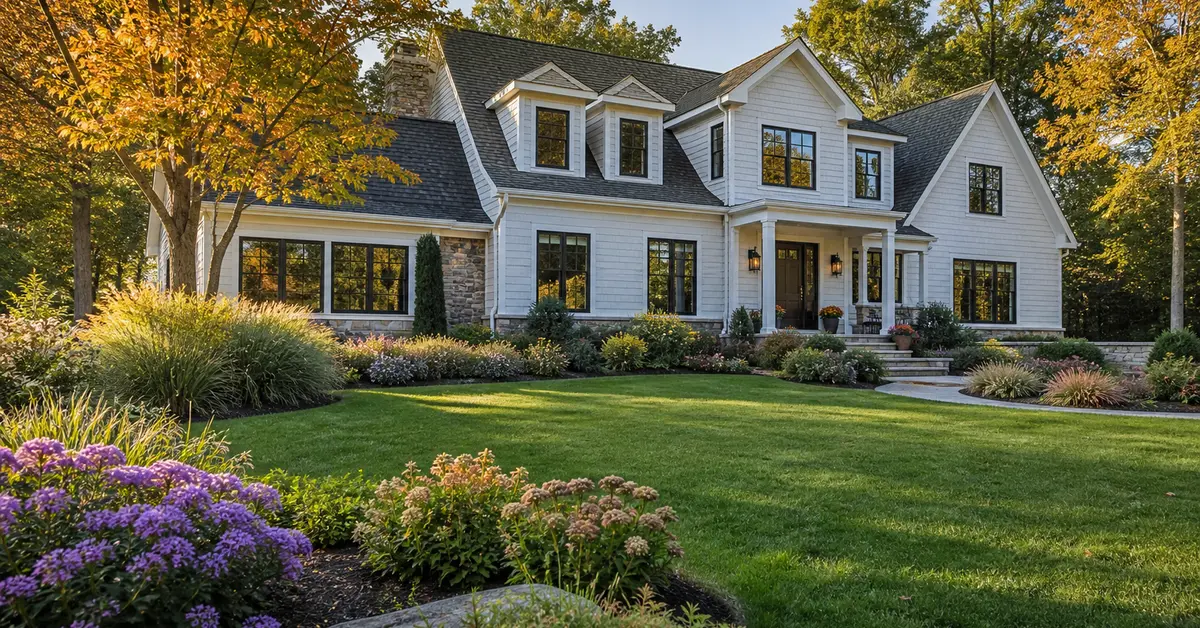
Fall is not right for every plant or property. It is useful for many perennials, deciduous shrubs, and trees when roots have time to begin establishing before the ground freezes. Start with a plan for the whole space, not plants chosen one at a time.
Why Plan Landscape Planting in Late Summer?
By late August, a landscape's weak points are easier to read. Overgrown shrubs may block windows, narrow beds may crowd mature plants, and fading annuals can expose gaps in color and structure.
This is useful information for a landscape design and rendering. A plan can show bed shapes, mature planting scale, and how the walk, lawn, foundation, and outdoor areas relate. It also separates suitable fall work from items that should wait until spring.
The goal is not to fill every open spot. It is to create a landscape that has enough room to mature, looks balanced from important viewpoints, and can be maintained without constant correction.
Start With the Site, Not the Plant List
A plant that performs well in one Fairfield County yard may struggle a few streets away. A sunny, windy bed near Long Island Sound does not have the same needs as a protected inland corner or a low area that stays wet after rain.
Before choosing plants, assess:
- The hours and timing of direct sun
- Soil drainage and signs of standing water
- Wind and coastal exposure
- Existing trees and root competition
- Deer pressure
- Views from the street, driveway, windows, and patio
- The mature height and width available
- Access for watering and routine care
If water repeatedly collects in a proposed bed, solve that issue before installing plants that require well-drained soil. A design may call for regrading, a drainage solution, or species suited to moist conditions. Treating the underlying condition protects the planting budget and produces a yard that is easier to care for.
Bollinger Landscaping's landscape and plant installation work matches the layout and plant choices to the property. Mature trees, older beds, and grade changes often shape what is practical.
Build the Bed Before Filling It
A new bed needs more than a clean edge. Its shape should fit the architecture and leave enough depth for layered planting. Assess the soil before adding amendments or fertilizer.
UConn guidance recommends considering drainage, sunlight, and soil test results when establishing a garden bed. Testing identifies pH and nutrient conditions instead of relying on a treatment that may not be needed. A thin layer of topsoil will not correct compaction or poor drainage.
Preparation may include removing vegetation, loosening compacted soil, adding an appropriate amount of organic matter, correcting grade, and defining the edge. Mulch can conserve moisture and reduce weeds, but it should not touch trunks or crowns.
For older beds that have lost their shape, a full reset may be more useful than adding a few new plants around declining shrubs. Bollinger's landscape bed installation service includes new beds as well as reworking worn or overgrown areas.
Choose Plants for More Than One Season
Fall color matters, but a complete bed should not depend on a brief bloom period. Start with structure, then add foliage, flowers, and texture appropriate to the site's scale.
Consider what each plant contributes during the year:
- Spring flowers or emerging foliage
- Summer form and texture
- Late-season blooms or fall color
- Winter stems, seed heads, berries, or evergreen structure
Native and non-invasive plants are worth considering when they fit the site's light, soil, moisture, and design needs. Connecticut DEEP recommends replacing invasive plants with native species and including flowers that bloom from spring through late autumn. UConn also advises checking mature size to prevent crowding.
A foundation bed, shaded woodland edge, and sunny pollinator border should look and function differently. Selection should also account for deer browsing and long-term maintenance.
Know What Can Be Planted in Fall
Timing depends on the type of plant and the forecast, not just the date on the calendar. UConn Extension recommends allowing at least six weeks before the first hard frost for late-summer and early-fall installation of trees, shrubs, and perennials. Its tree and shrub guidance gives balled-and-burlapped plants a similar six-to-eight-week buffer before heat or cold stress.
Early fall can suit many perennials and deciduous woody plants. There are exceptions: broadleaf evergreens are often better planted in spring, and slower-rooting species should not be pushed into a late schedule.
A responsible planting plan may therefore be phased. Install suitable beds and plants now, reserve sensitive material for spring, and leave intentional space rather than making a last-minute substitution. The planting date should support plant health, not a deadline.
Use Seasonal Color Where It Has the Most Impact
Seasonal color is different from the permanent framework of a landscape. It works best in focused locations such as the front entry, walkway intersections, mailbox bed, patio containers, or another area seen every day.
For Connecticut fall displays, UConn highlights mums, asters, ornamental cabbage and kale, pansies, violas, heuchera, sedums, and ornamental grasses. The mix depends on sun, space, and the desired display period.
Concentrate seasonal plants in a few visible areas. A coordinated seasonal color installation can refresh a property without competing with permanent plantings. Repeating a limited palette often looks more settled than using every available color once.
Plan Watering and Aftercare Before Installation
New fall plantings still need regular attention. Cooler weather may reduce water loss, but roots cannot establish in dry soil. UConn advises continuing to water new trees and shrubs until the first hard frost when fall rain is limited.
There is no one-size-fits-all watering schedule. Soil, rainfall, sun, wind, plant size, and irrigation affect drying. Water should reach the root zone without saturating the bed, so check the soil instead of assuming cool air means moisture.
Confirm that an existing sprinkler system covers new beds appropriately. Lawn heads may not provide targeted watering for new plants. Bollinger's irrigation services can be coordinated when a system needs adjustment or repair.
After installation, watch for settling, exposed roots, saturation, and deer damage. Ongoing plant and tree care should fit the species and season. Avoid unnecessary fall fertilizer.
A Practical Fall Planting Plan
A well-scoped project usually follows a clear order:
- Walk the property and define the goals.
- Observe sun, drainage, exposure, and existing conditions.
- Set the bed shape and overall layout.
- Choose plants by mature size and site needs.
- Separate fall-suitable material from spring items.
- Prepare soil and correct drainage or grade problems.
- Install, water thoroughly, and mulch correctly.
- Set a realistic aftercare plan through hard frost.
Homeowners considering landscaping in Fairfield can make these decisions while the property is still in full leaf. Across Fairfield County, read the site first, plan for mature growth, and give every plant a reason to be there.
Frequently Asked Questions
Is fall a good time to plant shrubs in Fairfield County?
Early fall can be a good time for many deciduous shrubs when they are installed with enough mild weather left for root establishment. Plant type, site conditions, and the expected frost window all matter. Broadleaf evergreens and certain slower-rooting species may be better reserved for spring.
How late can a fall landscape be installed?
There is no fixed cutoff date. UConn recommends allowing at least six weeks before the first hard frost for many trees, shrubs, and perennials. If that establishment window is too short, phasing the project and planting sensitive material in spring is the safer choice.
Should I fertilize new fall plantings?
Do not add fertilizer automatically. A soil test can show whether nutrients or a pH adjustment are needed. UConn cautions against fall fertilization that pushes tender growth close to cold weather. Bed preparation and steady watering are usually more important than forcing new top growth.
Can seasonal flowers be added without redesigning the whole yard?
Yes. Seasonal color can be concentrated in entry beds, borders, and containers while the existing shrubs and perennials remain in place. The display should still match the site's sun and watering conditions and coordinate with the colors and scale of the home.
Plan Now for a Stronger Spring Landscape
Fall planting works best as part of a longer view. A thoughtful layout, prepared soil, site-matched plants, and realistic aftercare can improve the property now and support the next growing season.
Bollinger Landscaping provides design, plant and bed installation, seasonal color, drainage, irrigation, and ongoing property care across Fairfield County. To discuss what fits your yard this fall and what should be planned for spring, request an estimate.