
Commercial holiday lighting in Fairfield County should be planned around the business, not copied from a residential roofline. Decide what customers need to notice, which entrances and walkways must remain clear, how the display fits the property’s brand, where approved power is available, and when installation and takedown can occur without disrupting operations.
Key Takeaways
- Begin with customer sight lines, entrances, operating hours, and brand fit.
- Use a scaled property plan to define display zones and no-go areas.
- Confirm product ratings, power, attachment methods, access, and weather exposure.
- Set installation, service, and takedown expectations before peak season.
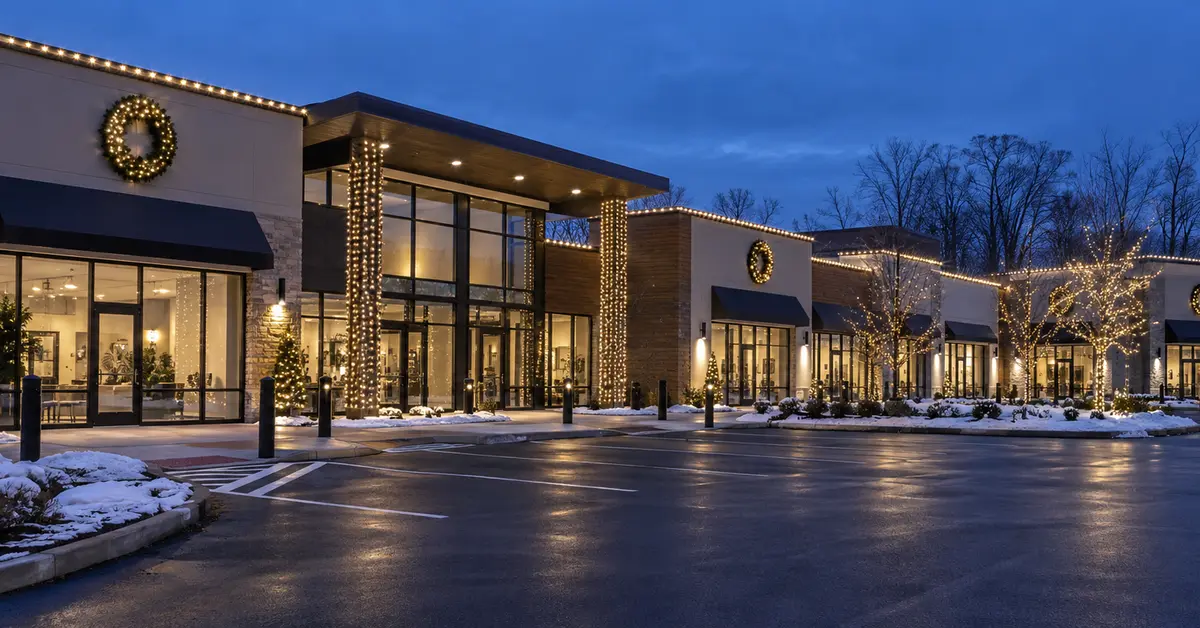
Design for How the Property Is Seen
A restaurant viewed from the road, a professional office approached on foot, and a retail center entered from several parking lanes need different compositions. Identify the primary view at dusk, the customer arrival route, secondary entrances, and areas visible only to staff. Put the strongest visual emphasis where it helps orientation and curb appeal.
Bollinger Landscaping provides holiday lighting design and installation for residential and commercial properties. A commercial plan should identify rooflines, columns, trees, monument features, and entrance elements without covering the entire building in one repeated treatment.
Match the Business Instead of Chasing Brightness
A medical office may need a calm, clear entrance. A hospitality property can support a richer display. A corporate campus may favor consistent rooflines and selected trees. Choose color temperature, density, and focal points that fit the architecture and customer expectations. Brightest is not automatically most effective.
Protect Customer and Staff Routes
Map sidewalks, accessible routes, curb ramps, loading areas, service doors, fire lanes, snow-storage areas, and maintenance access. Decorations, planters, cords, and temporary supports should not narrow a required route or create a new trip point. Keep entrances readable after dark and after snowfall.
The landscaping service page shows how built and planted features shape a property. Holiday lighting should work with those features without damaging masonry, bark, roofs, or plant structure.
Specify Products for the Actual Exposure
The U.S. Consumer Product Safety Commission advises using lights tested for safety by an independent testing laboratory, checking sets for damaged sockets and wiring, and fastening outdoor lights to firm supports. Its Holiday Decoration Safety Tips provide a useful baseline for product inspection and outdoor attachment.
A commercial plan should also record which products are rated for exterior use, where connections will be sheltered as permitted, and how circuits will be protected. Final electrical decisions belong with qualified personnel and applicable code requirements. Do not improvise permanent wiring for a temporary display.
Build the Power Plan Before the Visual Plan Is Final
Inventory available outlets and circuit locations, then compare them with proposed display zones. Confirm who may access panels, whether timers or controls are approved, and how the system will respond to operating hours. If the desired display exceeds safe available capacity, revise the display or involve a qualified electrician.
Plan Attachments Around the Building
Roof edges, gutters, stone, siding, railings, trees, and freestanding elements require different attachment methods. A good plan names the surface and approved non-damaging method. It also anticipates wind, rain, ice, and repeated freeze-thaw conditions common in Fairfield County.
Review Bollinger's project gallery to discuss the level of finish expected across the property. The goal is a secure, consistent display with clean daytime appearance, not visible tangles and last-minute patches.
Coordinate With Snow and Property Operations
Holiday lighting remains in place while snow clearing, deliveries, trash collection, and winter maintenance continue. Keep controls, cords, stakes, and low decorations out of equipment paths. Mark unavoidable low components clearly on the operations plan, not only on the lighting plan.
For local context, review the Fairfield service-area page. Commercial properties in Westport, Southport, Easton, Wilton, and nearby communities may have different architecture and access, but they share the need for early coordination.
Set the Calendar Around the Business
Choose an installation window that avoids peak customer times, events, deliveries, and known exterior work. Decide when the display will switch on, daily operating hours, who can report an outage, and the target takedown period. If installation requires temporary access restrictions, communicate them to tenants and staff in advance.
The existing homeowner article on Christmas light installation planning explains why early scheduling matters. Commercial planning adds tenant coordination, customer routes, brand review, larger display zones, and operational constraints.
Define Service Expectations
Ask how outage reports are handled, what weather can delay service, and which damage is outside the agreed scope. Record one property contact plus a backup. Provide after-hours access instructions only through an approved secure channel, not in a public-facing document.
Use a Commercial Lighting Brief
- List the property type, operating hours, events, and decision-makers.
- Mark primary views, customer entrances, and no-go access zones.
- Choose a restrained color palette and display hierarchy.
- Document exterior-rated products, power locations, and attachment surfaces.
- Coordinate snow, deliveries, maintenance, and emergency routes.
- Approve installation, switch-on, service, and takedown windows.
- Save final daytime and nighttime photos for next season.
Bollinger Landscaping is an owner-led Fairfield company focused on long-term relationships and attentive property care. Read about Bollinger Landscaping before deciding whether its approach matches your commercial property.
Document the Approved Display
Save the signed concept, product list, control settings, and installation notes in the property's seasonal file. Photograph each elevation after dark and in daylight. The record helps a manager answer tenant questions, identify a failed zone, and decide what should change next year without rebuilding the plan from memory.
Include any limits imposed by leases, association rules, preservation requirements, or property ownership. If several businesses share a building, identify who can approve façade attachments and who controls common-area power. A visually simple display may still require several operational approvals. Resolving them before equipment arrives protects the schedule and keeps installers from making unauthorized decisions at the site.
Share a concise operations sheet with the people who open, close, maintain, and secure the property. It should show control locations, normal on and off times, the service contact, and what staff should do if they see damaged wiring or a dark section. Staff should not repair or relocate display components unless that responsibility is assigned and they are qualified. Clear reporting protects the display while keeping day-to-day building operations simple.
Make the Display Work After Opening Night
A commercial holiday display succeeds over weeks, not one photo. It should remain coherent in daylight, readable after dark, compatible with winter operations, and supported by a clear service and takedown plan. Early decisions give property managers time to align design, safety, access, and business needs.
To discuss a commercial property, contact Bollinger Landscaping or call (475) 260-3050.
Frequently Asked Questions
When should a Fairfield County business plan holiday lighting?
Begin while design, approvals, access, and installation windows are still flexible. The exact date depends on property size, operating schedule, display complexity, and seasonal demand.
Can commercial lights use the same plan as a home?
Not usually. Commercial sites add customer routes, tenant coordination, operating hours, loading areas, larger power needs, and brand-review requirements.
What should be included in a commercial lighting proposal?
Include display zones, product type and color, power assumptions, attachment approach, installation window, operating controls, service expectations, takedown, and storage scope.
How can lighting avoid conflicts with snow service?
Map plow routes, storage areas, walks, curbs, and equipment access before installation. Keep low components out of those paths and share the final plan with property operations.