
Professional Christmas light installation cost depends on how much of the house you light, how hard it is to reach, and what the quote includes. Exact figures need a look at the property, so compare quotes line by line on scope, not just the bottom number.
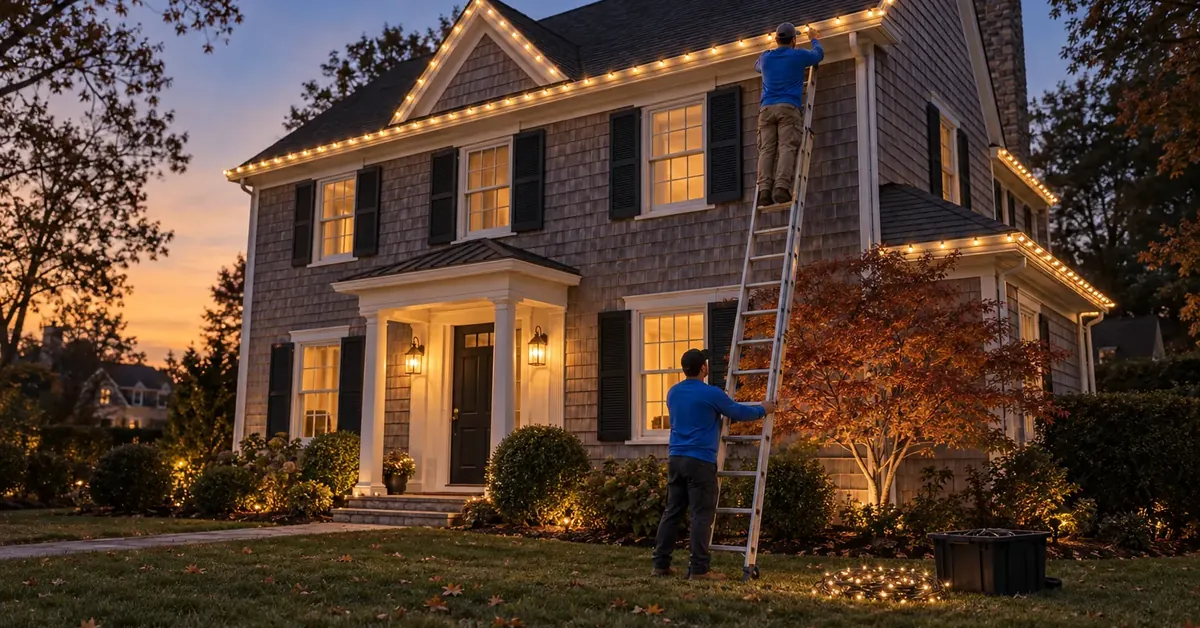
What does a professional Christmas light installation include?
The word "installation" covers more than hanging strands. A full-service job usually has three parts: a design and layout, the installation itself, and removal and storage after the season. Our holiday lighting service lists custom design and layout, installation, and removal and storage, along with commercial displays and holiday event lighting for businesses.
Design comes first because it decides everything else. Someone has to look at the house and decide where the lights go, what type of light fits each spot, and where the power will come from. Sloppy planning is how you end up with a bright front gable, a dark side, and extension cords across the walkway.
Installation is the hands-on part: clipping or securing lights, wrapping trunks, placing lights in shrubs, connecting everything, and testing it at night. Removal and storage is the part homeowners forget to ask about, and it matters, because it is a second visit with its own labor.
What factors drive the cost of holiday lighting installation?
No honest installer can give you a firm number without seeing the property. These are the factors that tend to move the price most:
- Linear footage. More roofline, porch edge, and fence or railing means more lights and more labor.
- Height and access. A single-story ranch is a different job from a three-story colonial with steep pitches. Ladder work at height takes longer and needs more care.
- Number of elements. Roofline, windows, wreaths, garland, and tree lighting each add time.
- Trees and shrubs. Wrapping a large tree trunk and its main branches takes much longer than outlining a window.
- Power and controls. Available outlets, timers, and how many separate circuits you need all affect the setup.
- Light type and quality. Commercial-grade lights usually cost more than big-box strands, and they tend to hold up better through a New England December.
- Takedown and storage. A quote with removal and storage built in covers more work than one that ends on installation day.
How do roofline, trees, and existing lighting change the scope?
Roofline is the usual starting point, and it is also where height and complexity show up first. Dormers, multiple gables, and steep pitches mean more corners to follow and more time on a ladder. A simple straight eave is far quicker.
Trees are the biggest swing factor. A single lit wreath and a pair of wrapped front trees make a small project. A yard with several mature trees, each wrapped from trunk to canopy, is a much larger one. Ask whether a quote counts trees by number, size, or how they are wrapped, because those can be very different jobs.
If you already have low-voltage landscape lighting, mention it. It does not replace a holiday display, but it tells the installer what is already on the property and may point to where power is available.
How do you compare holiday lighting quotes side by side?
Two quotes with similar totals can describe very different work. Before you compare dollars, compare what each one actually covers. Build a simple list and check each quote against it:
- Areas covered. Roofline only, or roofline plus trees, windows, and landscaping? Is every area named?
- Design. Is a layout part of the quote, or does a crew just show up with lights?
- Materials. Who supplies the lights, and what type are they? This varies by company, so ask.
- Service during the season. If a section goes dark in December, who fixes it, and is that covered?
- Removal and storage. Is takedown included, and who stores the lights?
- Timing. When will it go up, and when will it come down?
- Payment terms. What is due when, and is it in writing?
If one quote is noticeably lower, look for what is missing before you assume it is a better deal. The gap is often removal, design, or tree wrapping that was left out.
Is professional installation worth it compared to doing it yourself?
For a small display at ground level, many homeowners do fine on their own. A wreath, a lit doorway, and a few shrubs are weekend work.
The math changes with height, trees, and time. Roofline work means ladders on a surface that is often cold, damp, or icy by December in Connecticut. Falls from ladders are a real risk, and that alone is a good reason to hire out the high work. Big trees add more reaching and more untangling.
There is also the cost you do not see on the receipt: buying lights and clips, testing strands, replacing dead sections, hauling it all down in January, and finding space to store it. A professional job bundles much of that into one price. If you value your weekends and want a layout that looks planned, it is often worth it. If you enjoy the project and have a one-story house, DIY is reasonable.
What should you ask before booking an installer in Fairfield County?
Properties in Fairfield, Westport, Southport, Easton, Wilton, Weston, New Canaan, Darien, and Norwalk vary a lot from one street to the next. Roofline pitch, tree size, and driveway access all affect the work, so a good installer will want to see the property rather than quote from a street view.
Questions worth asking:
- Can you walk the property and show me a layout before work starts?
- What exactly is included, and what costs extra?
- Is removal and storage part of the quote?
- What happens if part of the display stops working?
- When will you install, and what is the takedown window?
Book early. Popular holiday dates tend to fill as the season gets closer, and starting conversations in the fall gives you time to compare quotes without being rushed.
If you want to talk through your house, trees, and what you would like lit, you can reach out to us here. Tell us about your property and we can talk through a sensible starting point, even if you are still collecting quotes.
Frequently Asked Questions
Does the quote usually include takedown and storage?
It depends on the company, so ask directly. Some quotes cover installation only and charge separately for removal. Removal and storage is listed as part of our holiday lighting service, but confirm in writing what your own quote covers.
How much do Christmas lights add to your electric bill?
It depends on how many lights you run, the type, and how many hours they are on. LED lights draw far less power than older incandescent strands, and a timer keeps hours in check. Ask your installer what type they use.
When should I book holiday lighting in Connecticut?
Earlier than you think. Popular dates tend to fill as the season approaches, so getting quotes in the fall gives you time to compare options and settle on a date. Waiting until the last minute may mean a later install or fewer choices.
Who supplies the lights, me or the installer?
With most full-service installers, the company supplies the lights, but this varies. Confirm it in the quote, along with the type of light and who handles replacement if a section fails.